Found this report below on Harold Taft, the meteorologist credited with launching the country’s first regular television weather segment on Halloween of 1949 on what was then WBAP-TV (now KXAS-TV) in Dallas-Fort Worth. He also did the weather on the overnight trucking show on WBAP-AM, which was heard across the country. Taft’s final television weathercast was in August 1991. He died from cancer a month later at age 69.
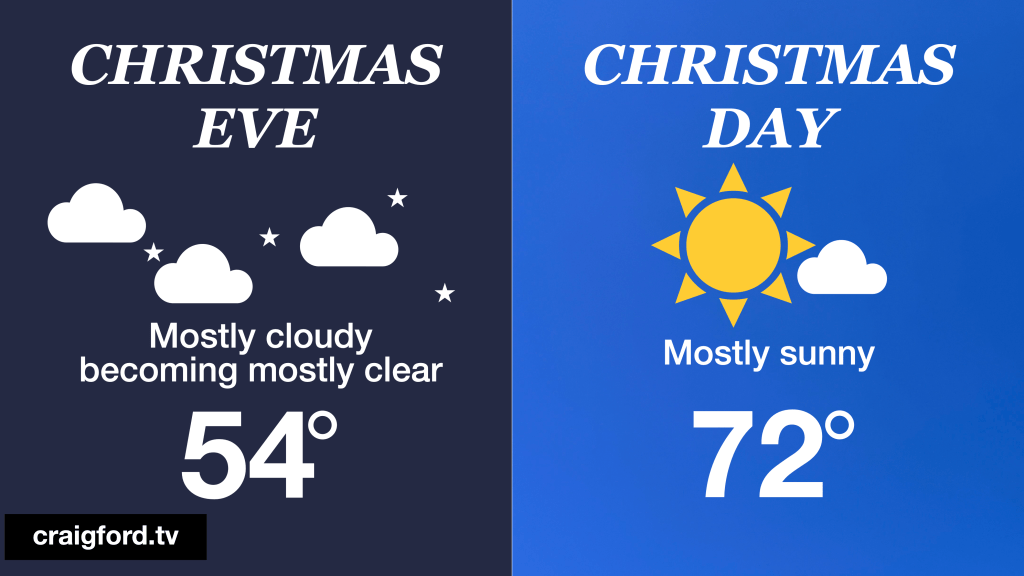
The National Weather Service has issued its first forecast for Christmas. Above is the forecast for Tupelo with only slight differences for other parts of Northeast Mississippi.
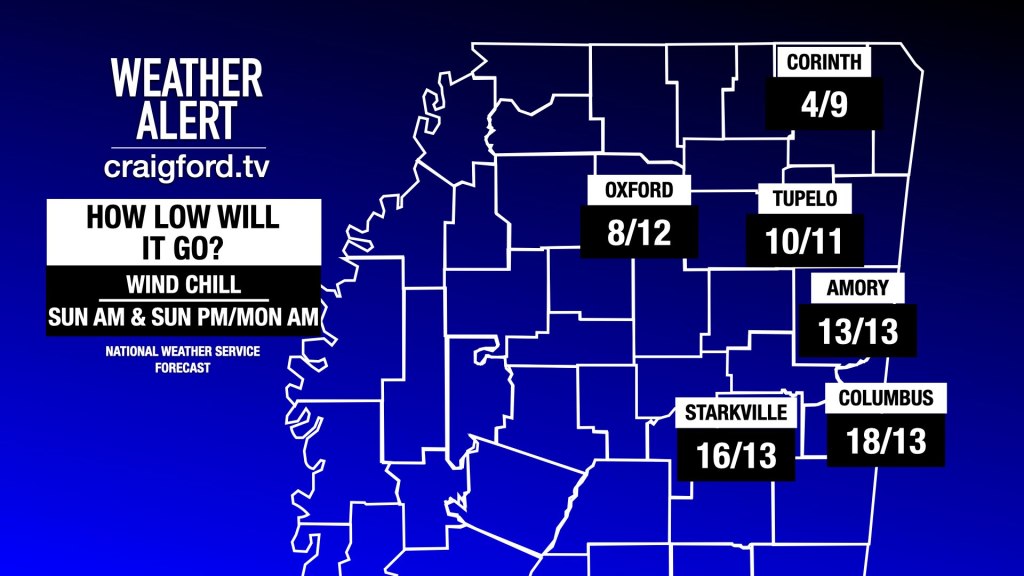
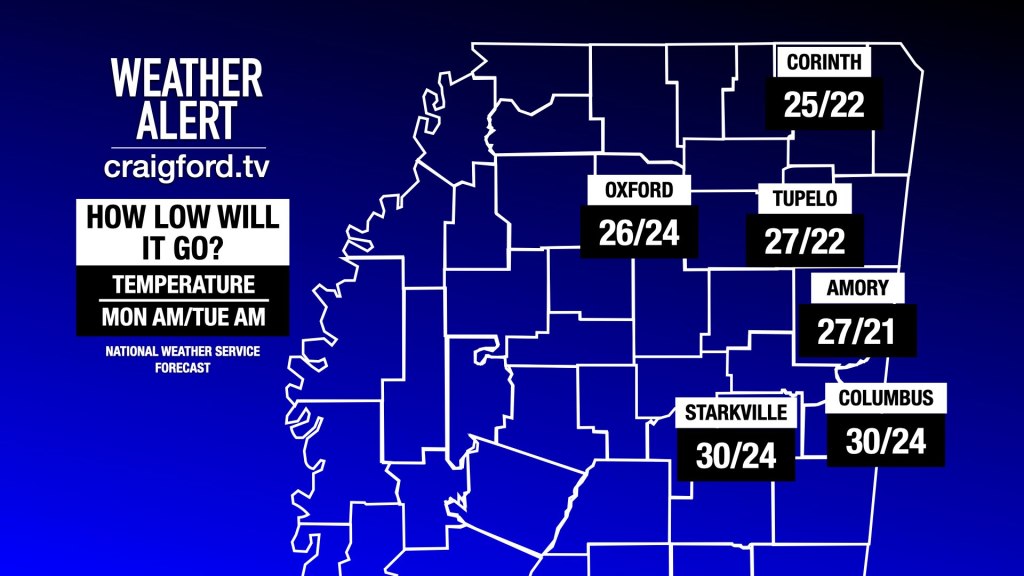
A mild Saturday will give way to bitter cold Sunday into Monday with it feeling like it’s in the teens or single digits across Northeast Mississippi. They won’t be as low in the Golden Triangle as it will be in Corinth, but it’ll still be cold.
The low temperatures/wind chills will first arrive Sunday morning. There will be a slight rise during the day, but the low temperatures/wind chills arrive again after sunset Sunday and stick around into early Monday. As the north winds subside, we’ll actually be a little warmer Monday.
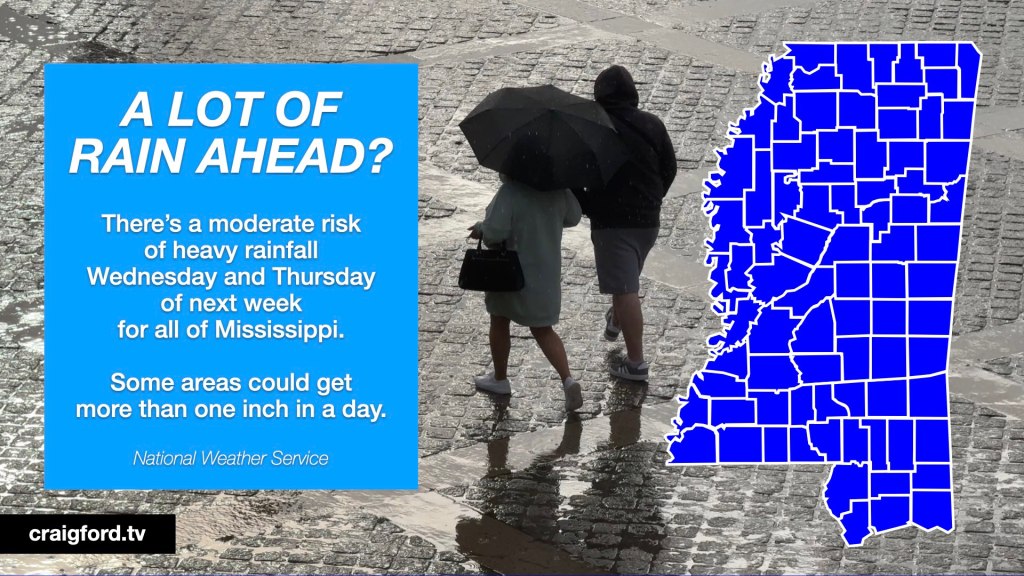
Looking ahead, the government’s long range forecast for the week of Christmas has temperatures above normal.
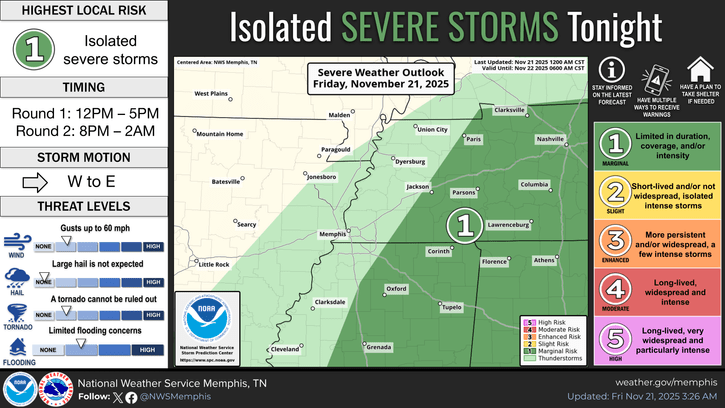
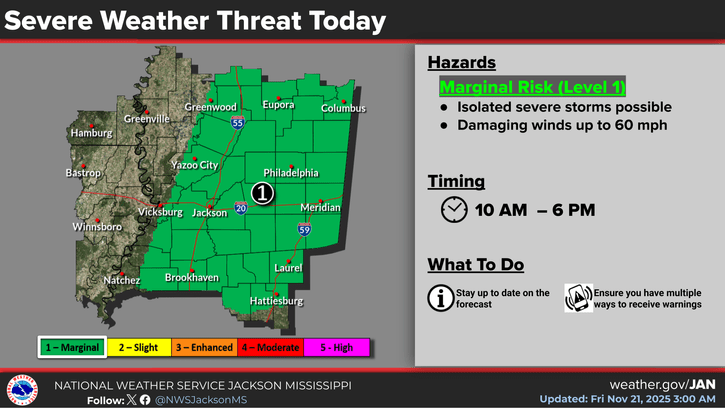
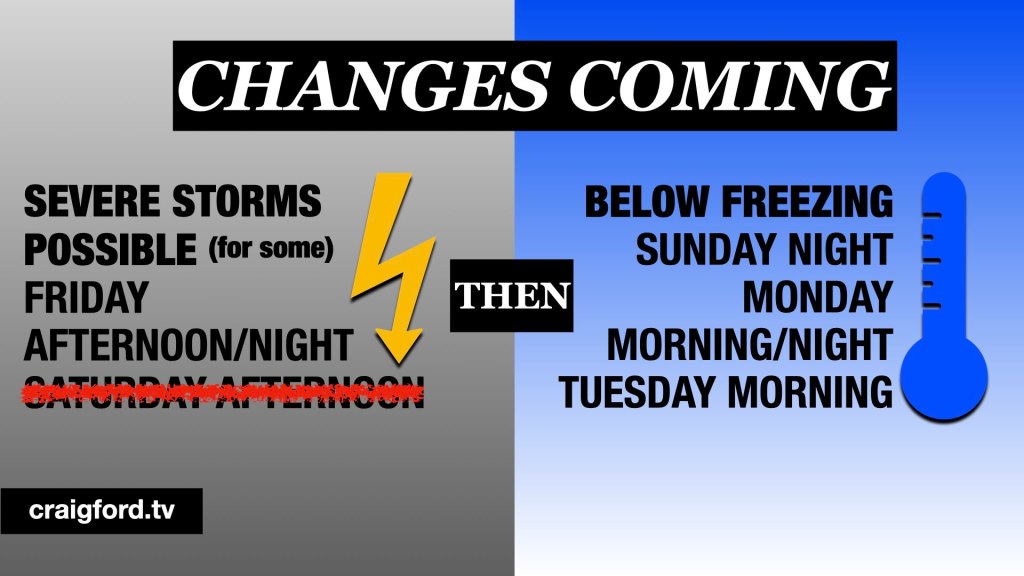
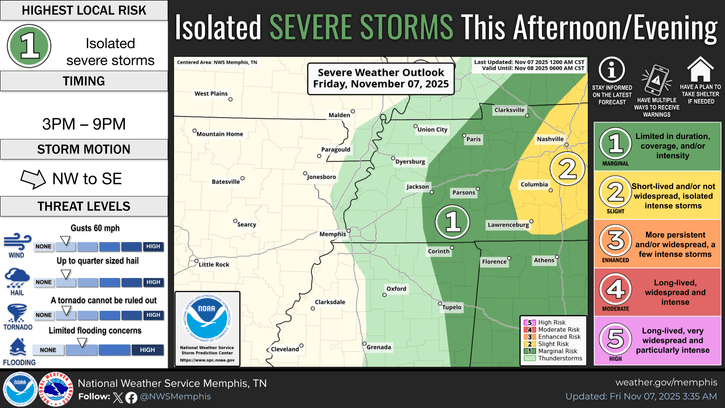
Looks like that severe weather threat for Northeast Mississippi has diminished significantly from what was originally expected. The National Weather Service has trimmed the area for a marginal risk to roughly east of Corinth-Tupelo-Columbus.
And the marginal threat for severe storms on Saturday is gone.
However, the below-freezing weather is coming by the end of the weekend.
I shared with Simon Owens, who covers the media industry, the significant change we’re seeing when it comes to weather coverage in our corner of the world. First came Matt Laubhan’s departure from WTVA earlier this month after more than a decade as chief meteorologist to start an all-digital weather service. Now comes word that James Spann is doing the same thing. However, he says he will remain with ABC 33/40 in Birmingham as its chief meteorologist when his service launches August 11.
Of course, changes in the media landscape are nothing new. I grew up in a world where Top 40 music formats transitioned from AM to FM radio. There was no such thing as cable television for me until I moved from suburban New Orleans to Amory in the 1980s. And the internet, smartphones and social media were not available at the start of my broadcast journalism career. Some of the content for my newscasts came from phone calls, faxes and the AP wire on a printer where I reused ribbon to save money.
And here we are with change again as more and more people try to find a way to make a living doing news in a digital world rather than through legacy media. The retired me is relieved that I’m getting to sit this one out, but my younger self would look forward to the challenge that’s ahead. Regardless of which path is taken, godspeed to those who are on the journey.